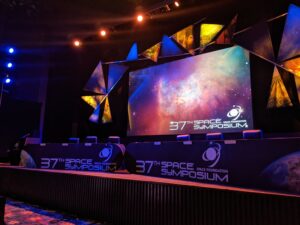
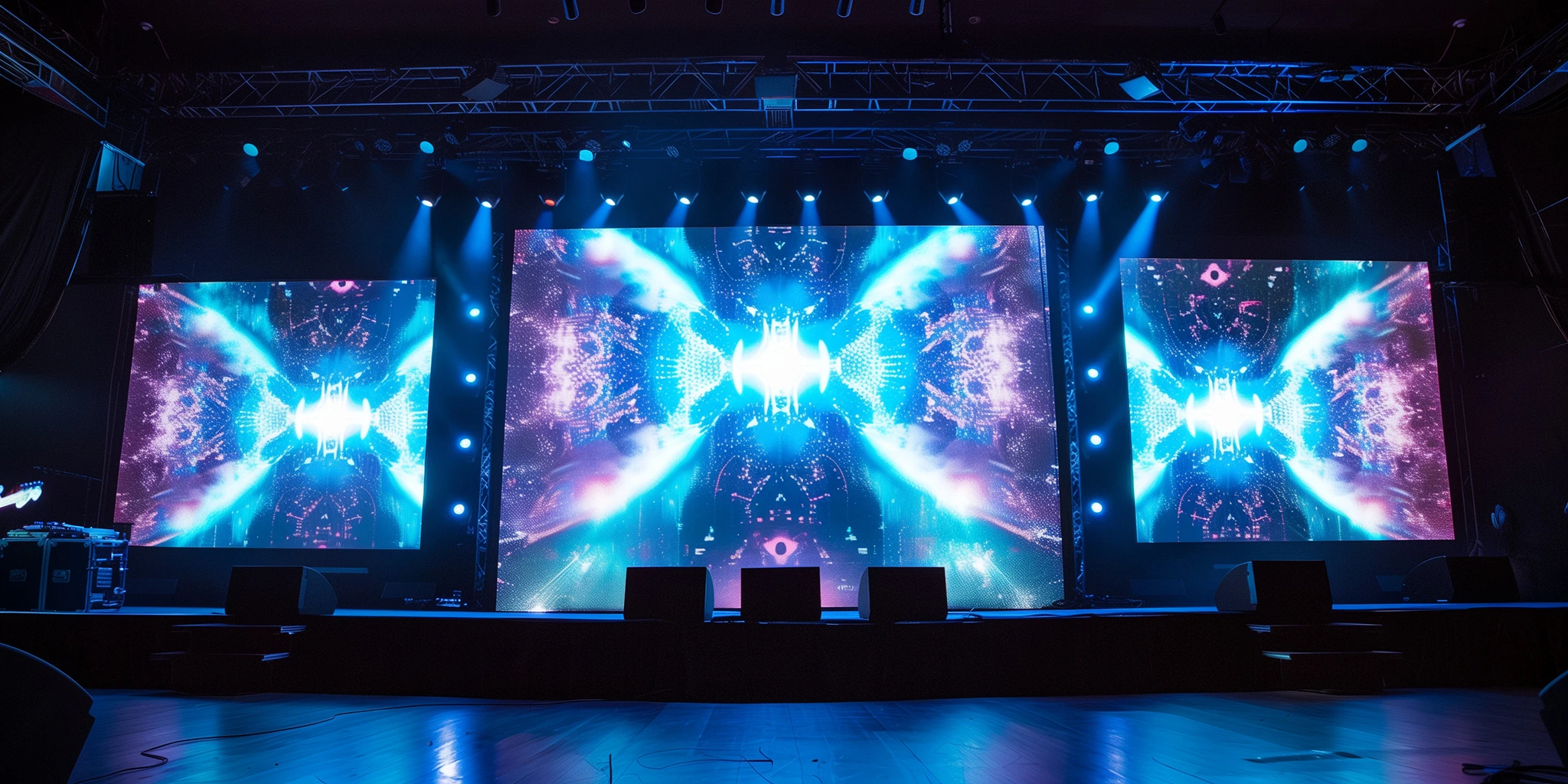
LED technology has rapidly transformed live events, delivering vibrant visual solutions that elevate ambiance, increase engagement and create unforgettable moments. But the most important shift isn’t simply “bigger, brighter screens.” It’s how LED is changing the very language of event design while raising the bar for planning, content and execution.
Together, Brandon Gonzales, marketing manager at ROE Visual US, and Jeff Studley, president and founder of CPR MultiMedia Solutions, shine a light on where LED is headed, how to choose it wisely and what separates show-stopping deployments from stressful, last-minute scrambles.
How LED Became Scenic Architecture for Events
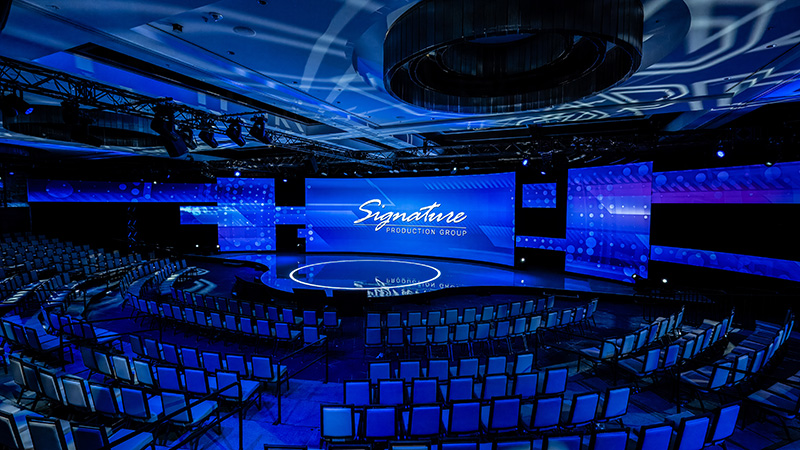
For years, LED was often treated as “a big screen behind the speaker.”
Today, it’s increasingly designed as part of the space itself and integrated into the build, flow and emotional tone of the room.
“One of the clearest shifts we’re seeing is its move from a screen to the environment,” Gonzales says.
When LED becomes architectural, it changes everything: sightlines, energy, pacing and how immersive the experience feels. And it’s not just about the people in the room. As hybrid events become the norm, productions must deliver for both the in-room audience and the online audience. LED is built to perform in both environments.
“LED delivers clarity across large spaces while providing consistency in color and exposure on camera, which is critical as most events now serve a ‘second audience’ online,” Gonzales says.
That camera performance advantage is especially important in mixed-light environments and high-pressure broadcasts, where projection can struggle. It also reshapes show flow. Instead of set changes and hard transitions, producers can evolve the environment in real time.
“Teams can move seamlessly between keynote support, brand moments, scenic texture, transitions and sponsor integrations without physically changing the set,” Gonzales says.
“As expectations rise, investment in design and LED staging becomes less about spectacle and more about communicating intention.”
Choose the Medium That Fits the Moment
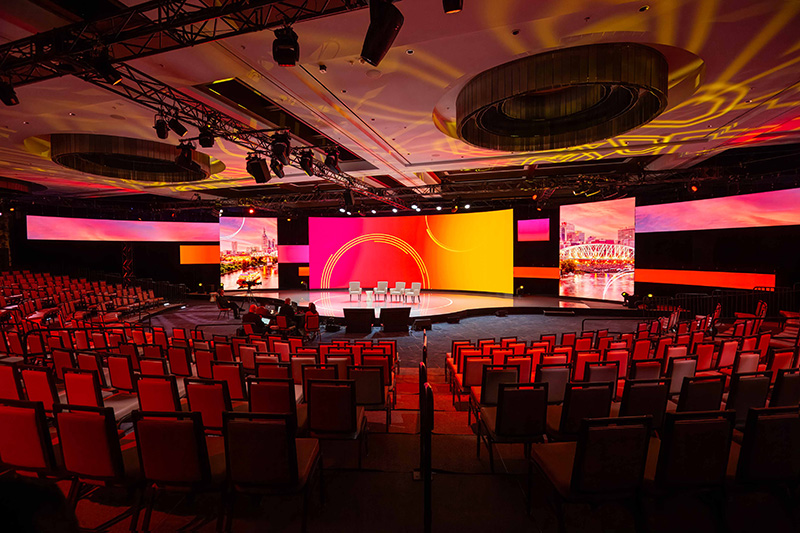
The strongest event designs start with intent. That’s why teams should begin with the goals of the experience and the realities of the space. “Choosing between LED, projection and printed scenic ultimately comes down to the goals of the experience and the realities of the space,” Gonzales says.
LED excels at large-scale impact, high brightness, reliable on-camera performance, frequent content changes, and custom shapes.
“Printed scenics are static. LED is not,” Studley says, though printed scenic still wins when permanence, texture, and physical depth are the priorities. Projection works best in light-controlled environments with simpler content needs and a softer aesthetic, often at lower cost. Projection mapping can handle complex forms but remains constrained by placement angles and shadow issues.
Gonzales adds a practical reality: “Projection requires lots of space either in front of or behind, that will have no traffic. (It’s) a challenge in a small space.”
Ultimately, he suggests the conversation should move beyond which technology is “better.” Instead, focus on the strengths and limitations of each because the most compelling environments often come from combining them thoughtfully.
The Rise of Multi-Surface, Curved LED Environments
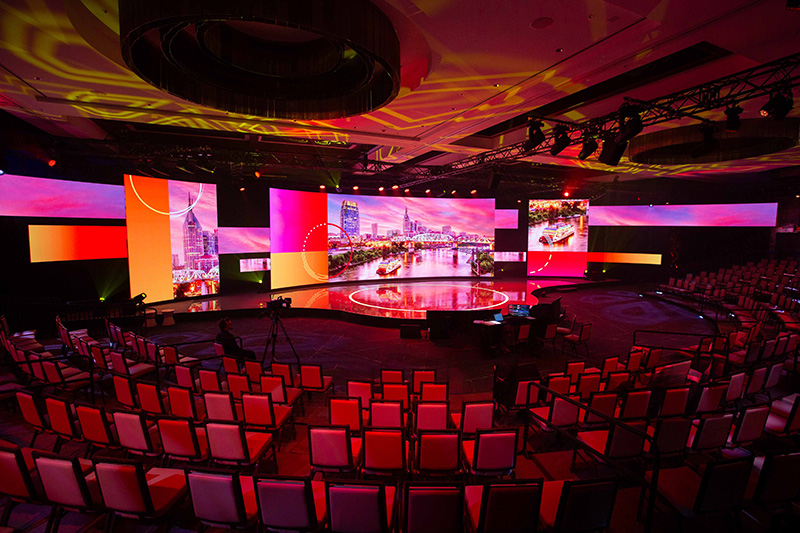
In today’s most dynamic productions, a single LED wall is being replaced by layered stage ecosystems, which are multiple surfaces working together to create depth, hierarchy and visual pacing.
This shift is fueled by rapid advancements in LED infrastructure, like curves, transparency, bespoke shapes and even kinetic options: “Designers are no longer limited to flat, opaque canvases,” Gonzales says.
Curved LED, even subtly used, can immediately elevate the premium feel of a space when content is designed for the geometry.
And beyond curved panels, new flexible LED display materials are expanding what’s possible. Think fabric-like surfaces that can bend and contour more freely than traditional rigid tiles.
“We are currently creating options for trade show booths and for big room entries that are immersive,” Studley says. “Our dance floor structures for LED can be mated with a ‘tunnel structure’ to create a pathway with video content that surrounds those that walk through. With the flexible LED panels that now curve either concave or convex, we can even make it a winding path.”
Together, these innovations are pushing LED beyond “screen thinking” and into “material thinking” where video behaves like an architectural surface.
When LED Goes Wrong: It’s Planning, Not the Panels
When LED goes wrong, it’s rarely because the technology failed. It’s because planning and coordination didn’t happen early enough, especially around specifications, camera needs, logistics and content workflows.
“LED challenges rarely stem from the technology itself, but from gaps in planning and coordination,” Gonzales says.
One of the most common problems is misspecifying the display without considering viewing distance and camera requirements. “Pixel pitch, LED type, viewing angle, brightness and color rendering all influence performance,” Gonzales says.
Studley also points to practical on-the-ground considerations that teams sometimes overlook, such as cases, weight, rigging and power requirements. “A big screen of LED takes more cases and pieces than large projection screens,” he says. “The weight is another factor… so hanging point limits and costs of rigging can be barriers. Electrical requirements are also greater than for other types of displays.”
Then there’s a crucial detail many teams learn the hard way: tile handling and edge damage.
“A major point to be aware of is that LED tiles that comprise the finished wall are subject to pixel damage on the edges from assembly and disassembly handling,” Studley says. “The need for crew that has been taught how to gently handle the tiles… is critical. It does not take much pressure at all for the LED on the outermost edge of the tile to be broken or displaced.”
Content First: Design for the LED Canvas
A gorgeous LED system won’t save weak content.
And even great content can fall flat if it’s not designed for the LED canvas, resolution, processing workflow and camera environment.
Gonzales frames content as a core show discipline, not a late-stage deliverable. “Content strategy for LED is most effective when it’s treated as a core show discipline rather than a late-stage deliverable,” he says. “Designing to the native canvas, rather than relying on scaling, creates intention.”
Equally important is understanding how LED interacts with IMAG and live cameras so visuals enhance readability and presenter focus rather than compete with them.
Gonzales offers a useful creative framework: “The most effective shows approach LED the way lighting is approached, using hierarchy and pacing to support the narrative.”
Studley brings the technical foundation into sharp focus, saying the most important question to be answered is what pixel pitch, the space between each pixel, is best for the content.
He explains how content type influences pitch needs: “If just video playback the pitch can be lower than if text and technical drawings are to be displayed.”
For trade show booths, he says, “Typically, we like to see lower than 2.0mm for screens inside a trade show booth.”
And he grounds it in real planning logic: “The primary decision on pitch comes down to viewing distance, with screen size next.”
A guideline for big video: “A handy rule of thumb for big video, not text content, would be a mm of pitch for each 10 feet.”
When content, canvas and story align, LED stops competing for attention and starts reinforcing the message.
LED Budget and ROI: Plan Early, Design for Multi-Use
LED budgets often rise for a reason planners don’t always anticipate: labor and build time scale quickly as screens get larger.
“One thing to be aware of is that unlike projection the bigger the screen the more the time by a lot for set-up,” Studley says. “With a big projection screen the time to build might be an hour…” but “with a big LED screen, figure half a day.”
He also points out a long-term savings advantage: “On the other hand, there is no need to replace lamps like in projectors. That is a savings.”
Gonzales adds that costs can escalate when teams treat LED as a single “wow” moment instead of a flexible platform that supports the full program, which is why “understanding LED budgets upfront helps planners make more strategic design decisions.”
Key cost drivers include total display area and pixel pitch, engineering, processing/playback, labor, logistics and content creation (often underestimated).
The best ROI comes when screens are designed for multi-use across the show—“the strongest return on investment usually comes from treating LED as a multi-purpose platform rather than a single visual moment”—supported by “reusable content toolkits… and early technical planning” that reduce risk and prevent reactive cuts.
What’s Next for LED
Studley sees the next wave of LED innovation centered on form and flexibility: “Curves and flexibility are the coming thing,” he notes, adding that “blankets are being introduced that are flexible in every direction…”
Gonzales agrees that the trajectory is toward deeper integration, predicting that “LED will continue shifting toward deeper scenic integration, with displays functioning as architectural elements rather than standalone screens.” He also points to rising expectations for on-camera performance in hybrid-first productions—driving earlier testing and more intentional color management—and emphasizes that “content is evolving from one-off videos into adaptable visual systems that can respond to different show moments.”
Taken together, their outlook is clear: LED is no longer specified in isolation; it must be designed in lockstep with scenic architecture, content pipelines and broadcast workflows.
Producers who start experimenting now with modular content systems, multi-zone environments and early camera testing will be better positioned as LED becomes even more foundational to live experience design.
Treat LED Like a System
The new standard isn’t simply bigger screens. It’s intentional environments where LED, scenic, content, camera and operations work together as one cohesive system. Gonzales describes the shift from spectacle to intention. Studley reinforces the realities of pixel pitch, handling, power and build time.
Together, their message is unequivocal: LED cannot be approached as a bolt-on video wall.
Treat LED as “just a screen” and you will leave most of its impact on the table, along with inviting avoidable technical and content failures. But when LED is engineered as part of the environment, with the right specifications, camera and rigging considerations, content built to the native canvas and a production plan that supports the full workflow, it becomes more than a visual layer. LED becomes the stagecraft itself, shaping how the room feels, how the story lands and what the audience takes with them long after
Written by

epnadmin
You may also interested in:
Mastering the Run of Show: The Blueprint for Seamless Events
For those of us behind the curtain, where every detail converges, it doesn’t take much to see how quickly a live event can unravel without a clear plan. A presenter
Sound Check: Best Practices for Managing Audio at Outdoor Events
With commentary by EPN Member, Nick Barnes, Ironman Sound Industries, a Markey’s company. Industry experts share their tips on producing a crystal-clear experience without annoying the neighbors. Planning an outdoor
Event AV Demystified: Top Questions Planners Ask—and How the Pros Deliver Seamless Experiences
We spoke to three industry leaders—Brian Siebrandt of Video West Inc., Paul Aubuchon of Ironman Sound Industries, and Terra Sedillo of AVFX—to break down the most common AV questions event
Elevate Every Event: Smart AV Solutions for Any Budget
EPN Members and Vendor Partners recently gathered in northern New Jersey for their 2024 Leadership Symposium, themed Partnerships in Production. Every year, the Event Production Network invests in its members to ensure that they meet a North American standard of AV excellence.
Top 10 Questions Planners Should Ask Their AV Company
Article by EPN Member, Eric Newkirk, AVFX Also featuring a webinar! Event planning involves a myriad of tasks, from managing logistics to ensuring every detail aligns perfectly. But one of
2024 EPN Leadership Symposium Focused on Partnerships in Production
EPN Members and Vendor Partners recently gathered in northern New Jersey for their 2024 Leadership Symposium, themed Partnerships in Production. Every year, the Event Production Network invests in its members to ensure that they meet a North American standard of AV excellence.
7 Event Video Solutions That Will Captivate Your Audience
High-quality event content is essential to the success of any event. Besides attracting the right audience, setting the tone, and driving engagement and participation, such event content can boost your return on investment (ROI)
How Partnering with a North American Audio-Visual Network Produces Better Events
In the business world, the expression “the whole is greater than the sum of its parts,” coined by Aristotle, appropriately expresses the belief that a single company can be more successful when it’s part of a larger network.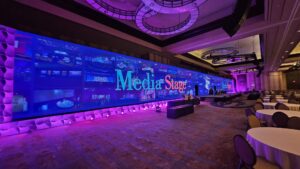
5 Strategies for Leveraging AV Partner Collaboration to Elevate Event Content
High-quality event content is essential to the success of any event. Besides attracting the right audience, setting the tone, and driving engagement and participation, such event content can boost your return on investment (ROI)